Media literacyGrades 3–5
Ad or Info?
Students sort mock posts, videos, and headlines into ads, information, and clickbait, hunt for persuasion tricks, and then create an honest, clearly labeled ad of their own.
40 minutes · 3 handouts (card sort, checklist, worksheet) · hybrid

Digital citizenshipGrades 3–5
Credit Where It's Due
After their own doodles get "borrowed" without credit, students learn to credit creators, ask permission, and write an honest note whenever AI helped with their work.
45 minutes · 3 handouts (card sort, reading, worksheet) · hybrid
Digital citizenshipGrades 3–5
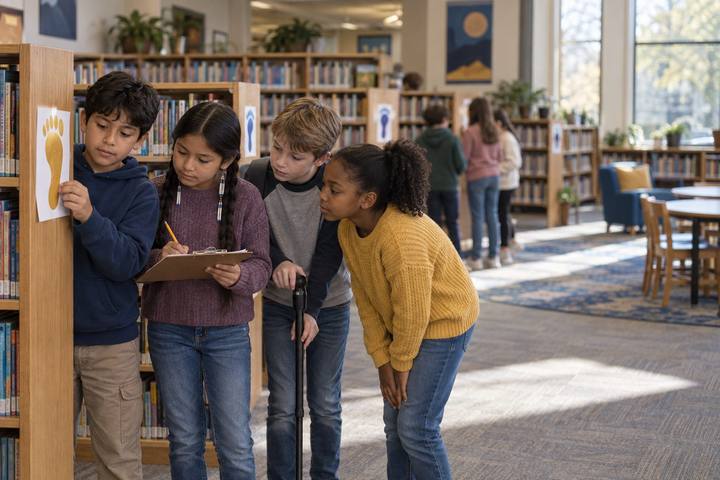
Digital Footprint Trail
Teams follow a trail of paper footprints left online by a fictional fourth grader, piece together what a stranger could learn about him, and plan the footprints they want to leave.
40 minutes · 3 handouts (cut-apart cards, organizer, worksheet) · no devices needed
Digital citizenshipGrades 3–5
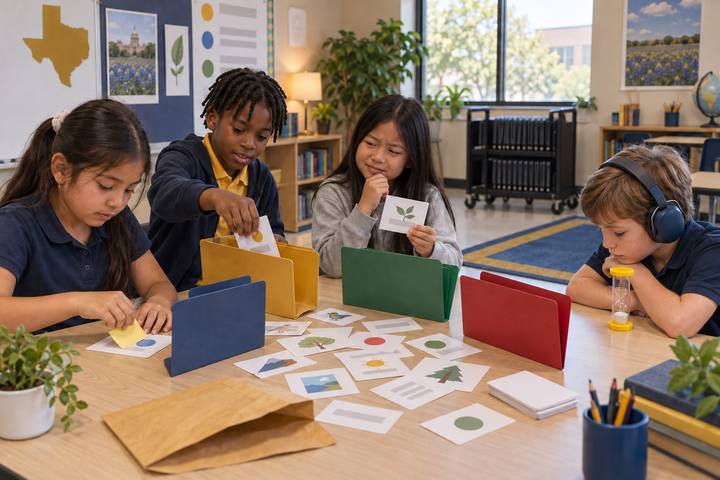
Digital Notebook Detectives
Students rescue a classmate's messy pretend drive, invent a naming and folder system, use version history to recover lost work, and catch what an AI summary of their notes left out.
45 minutes · 3 handouts (cut-apart cards, reading, worksheet) · hybrid

Gen AIGrades 3–5
Garbage In, Garbage Out
Students write instructions for a classmate "robot" who follows them exactly, discover why vague prompts get surprising results, and build a recipe for clear prompts they can use with AI and with people.
40 minutes · 3 handouts (cut-apart cards, worksheet, organizer) · no devices needed

Gen AIGrades K–2, 3–5
News From the Future Circle
Young learners hear friendly pretend news about helpers that might exist someday, draw or act out one helpful thing and one tricky thing, and vote on a class rule for the helper.
30 minutes · 3 handouts (cut-apart cards, worksheet) · no devices needed
Gen AIGrades 3–5, 6–8
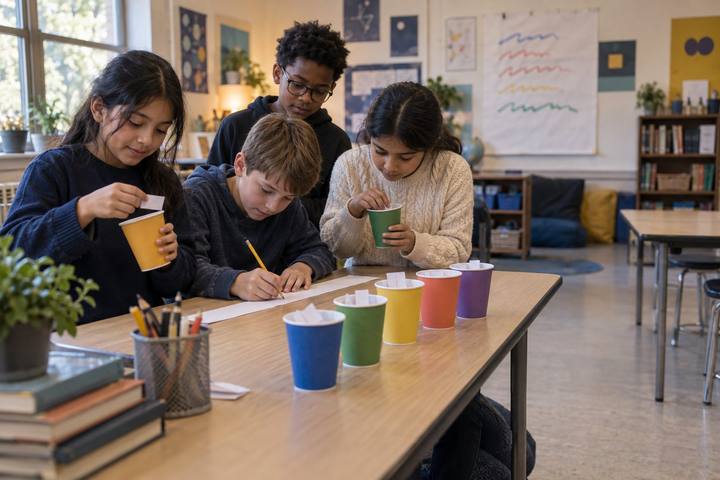
Next Word, By Hand
Students build a paper "word-guessing machine" from sentence cards, watch it invent a confident false fact about a lake, and find out why a longer prompt helps but never makes a chatbot know things.
45 minutes · 3 handouts (cut-apart cards, organizer, worksheet) · no devices needed

Digital citizenshipGrades 3–5
Password Power & Secret Keepers
Students rank passwords from weak to strong, build silly-but-strong practice passphrases, and sort tricky moments into keep it secret, share with a trusted grown-up, or tell a grown-up now.
40 minutes · 3 handouts (cut-apart cards, card sort, worksheet) · no devices needed
Digital citizenshipGrades 3–5, 6–8
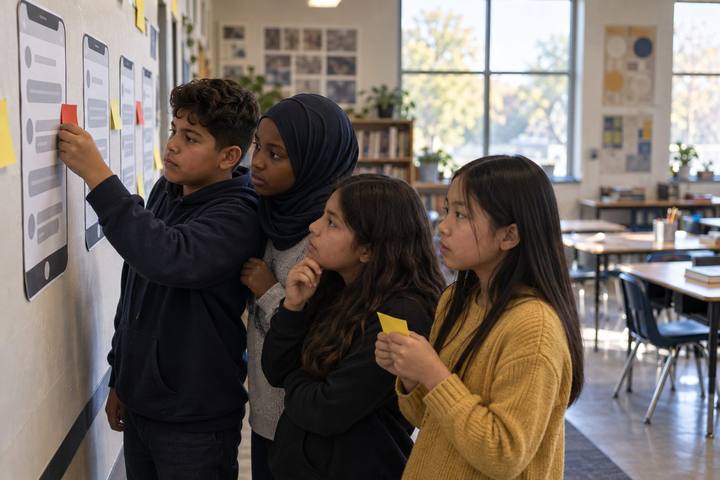
Phish Tank IRL
Teams sort fourteen texts, emails, and game-chat messages into safe, scam, or check-another-way, and learn why AI-polished scams make spelling mistakes a useless clue.
40 minutes · 3 handouts (card sort, checklist, worksheet) · no devices needed

Media literacyGrades 3–5
Photo Detective
Students investigate described photos that were cropped, edited, or made with AI, and learn two fact-checker moves that work better than staring: Stop, and Find better coverage.
45 minutes · 3 handouts (cut-apart cards, organizer, worksheet) · hybrid

Digital citizenshipGrades K–2, 3–5
Smart Speakers, Smart Choices
Children role-play with a pretend talking speaker to learn that voice helpers listen for a wake word, may keep what they hear, answer by guessing, and sometimes need a grown-up instead.
35 minutes · 3 handouts (cut-apart cards, card sort, worksheet) · no devices needed
Digital citizenshipGrades 3–5
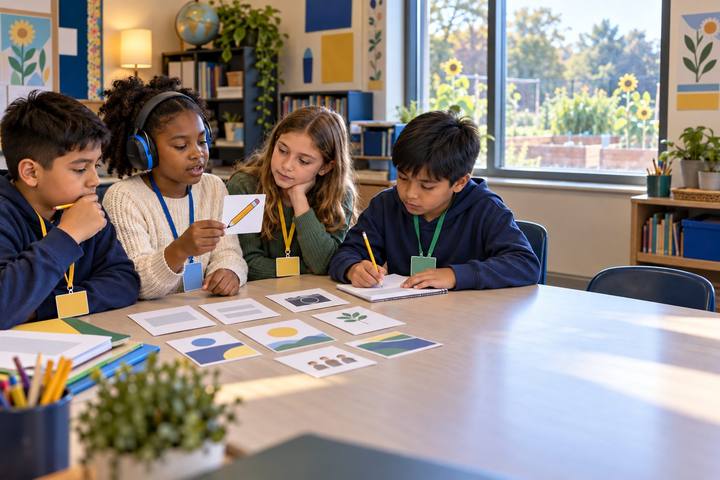
Team Tech Choices
Teams plan a real group project by matching each job to the right tool, or no tool at all, defending their choices, and setting goals they can track together.
45 minutes · 3 handouts (cut-apart cards, organizer, worksheet) · hybrid
Gen AIGrades 6–8, 9–12
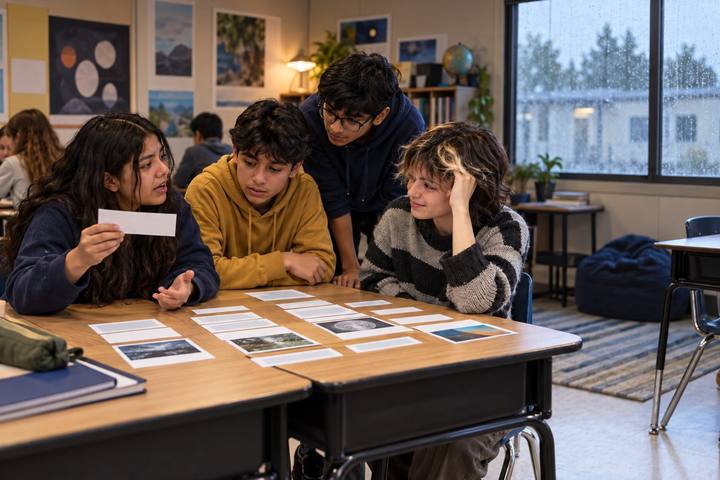
AI Study Buddy Contract
Students sort AI uses that build learning from ones that replace it, then write a SMART goal, a personal AI contract, and an honest-use log they keep for two weeks.
55 minutes · 3 handouts (card sort, worksheet, organizer) · hybrid
Gen AIGrades 6–8, 9–12
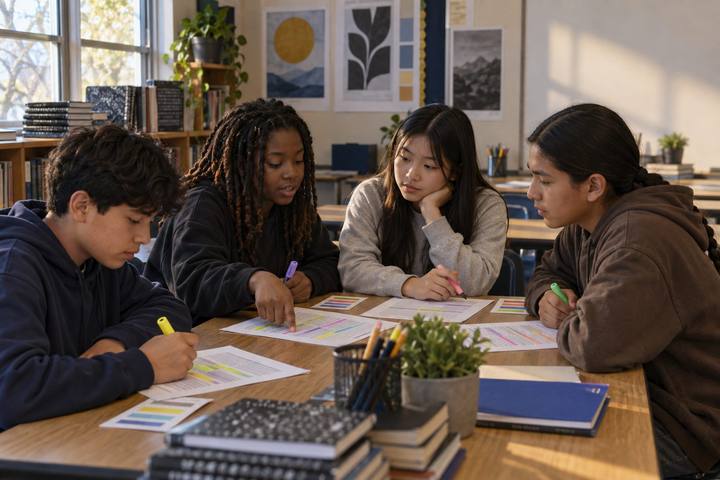
Bias in the Machine
Students read six mock AI outputs through different perspectives, find who is stereotyped or missing, and rewrite the prompts to fix it.
50 minutes · 3 handouts (reading, organizer, worksheet) · no devices needed
Gen AIGrades 6–8, 9–12
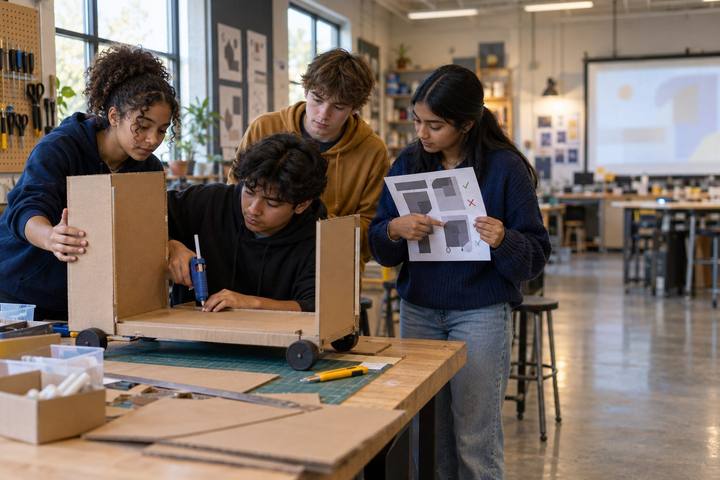
Community Problem Pitch
Teams use the engineering design process to solve a real school or community problem, invite AI to critique their ideas, reject what doesn't hold up, and pitch a solution with a record of what changed.
110 minutes · 3 handouts (reading, worksheet, rubric) · hybrid
Digital citizenshipGrades 6–8, 9–12
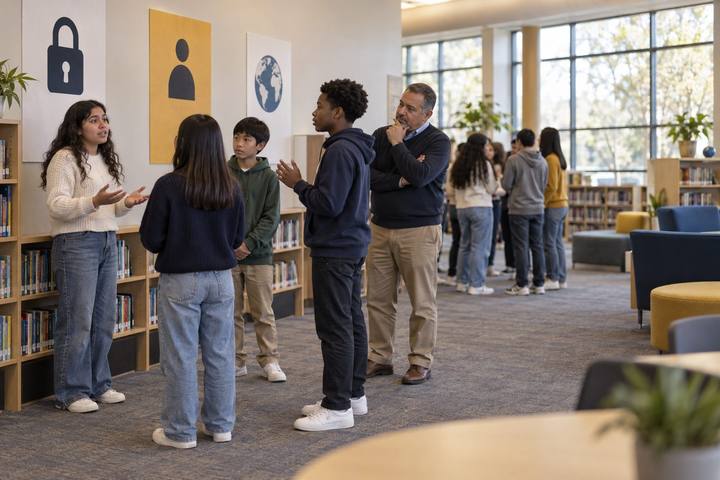
My Digital Safety Plan
Students work through real-world sharing dilemmas, audit account security and privacy habits, and write a personal safety plan they explain to a family member.
50 minutes · 3 handouts (cut-apart cards, checklist, worksheet) · hybrid
Gen AIGrades 3–5, 6–8
Next Word, By Hand
Students build a paper "word-guessing machine" from sentence cards, watch it invent a confident false fact about a lake, and find out why a longer prompt helps but never makes a chatbot know things.
45 minutes · 3 handouts (cut-apart cards, organizer, worksheet) · no devices needed
Digital citizenshipGrades 3–5, 6–8
Phish Tank IRL
Teams sort fourteen texts, emails, and game-chat messages into safe, scam, or check-another-way, and learn why AI-polished scams make spelling mistakes a useless clue.
40 minutes · 3 handouts (card sort, checklist, worksheet) · no devices needed
Media literacyGrades 6–8, 9–12
Presentation Makeover
Teams rescue a cluttered slide deck, making it clear, accessible, honestly sourced, and upfront about AI images, then pitch the revised version in 60 seconds.
55 minutes · 3 handouts (reading, checklist, rubric) · hybrid
Media literacyGrades 6–8, 9–12
Primary Source vs. AI Summary
Students read a clearly fictional 1911 letter, then catch an AI summary that changes dates, invents a quote, turns a rumor into a fact, and erases the neighbors who helped.
45 minutes · 3 handouts (reading, organizer) · no devices needed
Media literacyGrades 6–8, 9–12
Real, Fake, or Generated?
Students hunt for the classic clues of AI-made images and cloned voices, discover how often those clues mislead, and learn to check the source instead.
45 minutes · 3 handouts (cut-apart cards, organizer, worksheet) · hybrid
Digital citizenshipGrades 6–8, 9–12
Remix Rights
Students sort real-world remix decisions using copyright, Creative Commons, and fair use, then write credit lines that include honest notes about AI help.
50 minutes · 3 handouts (card sort, cut-apart cards, worksheet) · hybrid
Media literacyGrades 6–8, 9–12
Signal to Headline Lab
Students turn a true present-day tech trend into a plausible future headline and lede, then trade and fact-check each other's work for accuracy and clickbait.
50 minutes · 3 handouts (cut-apart cards, worksheet, checklist) · hybrid
Media literacyGrades 6–8, 9–12
Spreadsheet Sense-Making
Students turn a lunch survey into a spreadsheet or paper grid, compute counts and averages, build an honest chart, then catch and fix charts (and an AI chart suggestion) that mislead with a truncated axis or a cherry-picked range.
50 minutes · 3 handouts (organizer, reading, worksheet) · hybrid
Media literacyGrades 6–8, 9–12
The Feed Game
Students play a card-based recommendation engine by hand and watch their feed shrink to a few topics, then design ways to take it back.
45 minutes · 3 handouts (cut-apart cards, organizer, worksheet) · no devices needed
Digital citizenshipGrades 6–8
What Your Map App Knows
Students plot a fictional teen's Saturday from location clues on a town map, discover how much a trail of pings reveals, weigh safety against privacy, and write a location settings checkup plan.
45 minutes · 3 handouts (organizer, cut-apart cards, worksheet) · no devices needed
Gen AIGrades 6–8, 9–12
AI Study Buddy Contract
Students sort AI uses that build learning from ones that replace it, then write a SMART goal, a personal AI contract, and an honest-use log they keep for two weeks.
55 minutes · 3 handouts (card sort, worksheet, organizer) · hybrid
Media literacyGrades 9–12
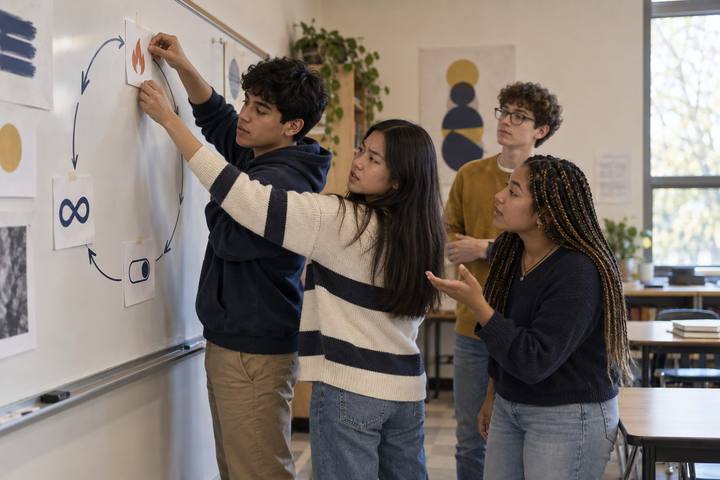
Algorithm Autopsy
Students dissect the design features of a fictional social app, trace how each one shapes attention and belief, and redesign the feed for people instead of engagement.
75 minutes · 3 handouts (card sort, reading, worksheet) · no devices needed
Gen AIGrades 6–8, 9–12
Bias in the Machine
Students read six mock AI outputs through different perspectives, find who is stereotyped or missing, and rewrite the prompts to fix it.
50 minutes · 3 handouts (reading, organizer, worksheet) · no devices needed
Digital citizenshipGrades 9–12, Higher Ed
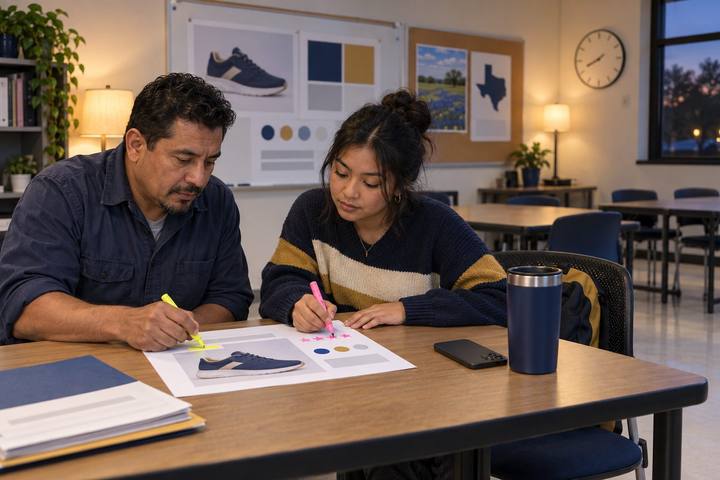
Cart Check: Shopping and Money Scams Online
Before they tap "Buy," students check the storefront, the deal, the reviews, and the payment method, and they practice exactly what to do if a purchase goes wrong.
55 minutes · 3 handouts (reading, card sort, worksheet) · hybrid
Gen AIGrades 6–8, 9–12
Community Problem Pitch
Teams use the engineering design process to solve a real school or community problem, invite AI to critique their ideas, reject what doesn't hold up, and pitch a solution with a record of what changed.
110 minutes · 3 handouts (reading, worksheet, rubric) · hybrid
Digital citizenshipGrades 9–12, Higher Ed
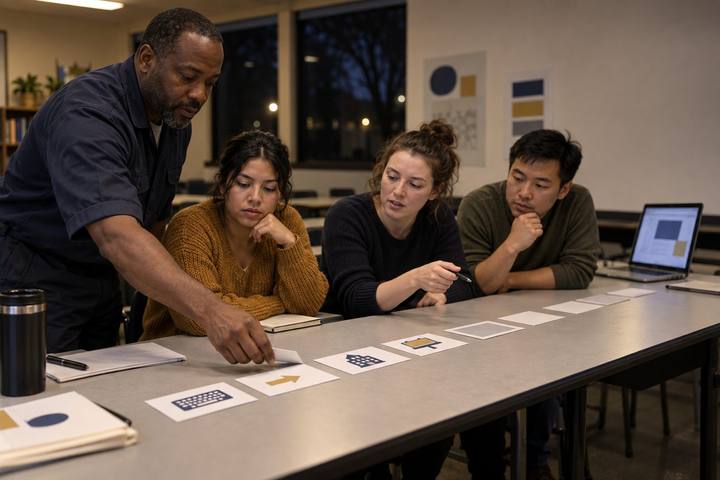
Data Trail Audit
Teams read an AI study app's privacy policy like investigators, map where their data could travel, and choose settings and habits that shrink their trail.
65 minutes · 3 handouts (reading, cut-apart cards, organizer) · hybrid
Media literacyGrades 9–12
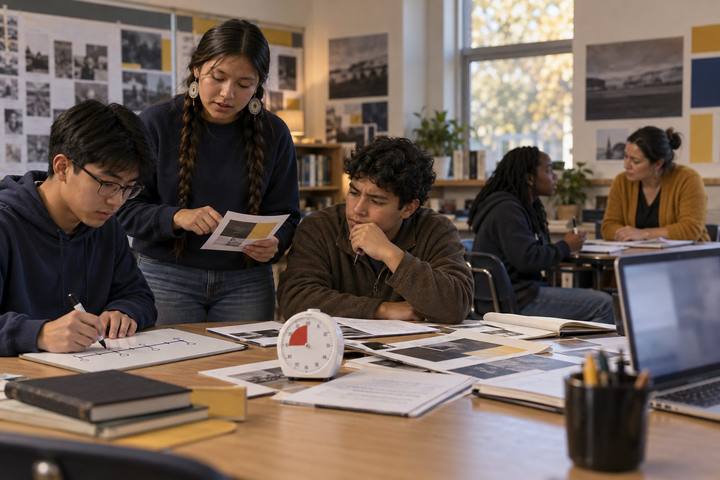
Deepfake Election Desk
Student newsroom teams race a deadline to decide which election-week tips are real, which are synthetic, and which they simply can't confirm yet.
70 minutes · 3 handouts (cut-apart cards, organizer, rubric) · hybrid
Gen AIGrades 9–12, Higher Ed
Disclose It
Students sort real-feeling academic integrity dilemmas across courses, then write honest AI-use disclosures and process logs they would stand behind.
55 minutes · 3 handouts (card sort, worksheet, checklist) · no devices needed

Gen AIGrades 9–12, Higher Ed
Hallucination Hunt
Students trace every claim and citation in a polished AI research brief and discover which ones lead somewhere and which ones lead nowhere.
60 minutes · 3 handouts (reading, cut-apart cards, organizer) · hybrid

Gen AIGrades 9–12, Higher Ed
Human + AI Studio
Students create a short piece with AI as a prompt partner, log every suggestion they keep, change, or reject, and defend their human choices in a studio critique.
90 minutes · 3 handouts (cut-apart cards, organizer, rubric) · hybrid
Media literacyGrades 9–12
Is This Health Advice Real?
Students check influencer clips, supplement ads, forum posts, and a chatbot answer about wellness by reading laterally, then decide when a question belongs with a trusted adult or clinician.
50 minutes · 3 handouts (cut-apart cards, organizer, worksheet) · hybrid
Digital citizenshipGrades 6–8, 9–12
My Digital Safety Plan
Students work through real-world sharing dilemmas, audit account security and privacy habits, and write a personal safety plan they explain to a family member.
50 minutes · 3 handouts (cut-apart cards, checklist, worksheet) · hybrid

Gen AIGrades 9–12, Higher Ed
Personal Learning Coach, With Guardrails
Students write custom instructions that turn an AI chatbot into a coach that makes them think, then stress-test it and judge it by evidence, not vibes.
90 minutes · 3 handouts (reading, worksheet, organizer) · digital
Gen AIGrades 9–12, Higher Ed
Policy Makers
Student teams research, draft, and pitch an AI and technology-use policy proposal to a mock board, and must pass the same five-question check real leaders use.
180 minutes · 3 handouts (reading, worksheet, rubric) · hybrid
Media literacyGrades 6–8, 9–12
Presentation Makeover
Teams rescue a cluttered slide deck, making it clear, accessible, honestly sourced, and upfront about AI images, then pitch the revised version in 60 seconds.
55 minutes · 3 handouts (reading, checklist, rubric) · hybrid
Media literacyGrades 6–8, 9–12
Primary Source vs. AI Summary
Students read a clearly fictional 1911 letter, then catch an AI summary that changes dates, invents a quote, turns a rumor into a fact, and erases the neighbors who helped.
45 minutes · 3 handouts (reading, organizer) · no devices needed
Media literacyGrades 6–8, 9–12
Real, Fake, or Generated?
Students hunt for the classic clues of AI-made images and cloned voices, discover how often those clues mislead, and learn to check the source instead.
45 minutes · 3 handouts (cut-apart cards, organizer, worksheet) · hybrid
Digital citizenshipGrades 6–8, 9–12
Remix Rights
Students sort real-world remix decisions using copyright, Creative Commons, and fair use, then write credit lines that include honest notes about AI help.
50 minutes · 3 handouts (card sort, cut-apart cards, worksheet) · hybrid
Media literacyGrades 6–8, 9–12
Signal to Headline Lab
Students turn a true present-day tech trend into a plausible future headline and lede, then trade and fact-check each other's work for accuracy and clickbait.
50 minutes · 3 handouts (cut-apart cards, worksheet, checklist) · hybrid
Media literacyGrades 6–8, 9–12
Spreadsheet Sense-Making
Students turn a lunch survey into a spreadsheet or paper grid, compute counts and averages, build an honest chart, then catch and fix charts (and an AI chart suggestion) that mislead with a truncated axis or a cherry-picked range.
50 minutes · 3 handouts (organizer, reading, worksheet) · hybrid
Media literacyGrades 6–8, 9–12
The Feed Game
Students play a card-based recommendation engine by hand and watch their feed shrink to a few topics, then design ways to take it back.
45 minutes · 3 handouts (cut-apart cards, organizer, worksheet) · no devices needed
Gen AIGrades 9–12, Higher Ed
Who Owns the Output?
In a structured academic controversy, students argue both sides of an open question: is it fair for AI tools to learn from artists' work, and who gets credit for what they make?
60 minutes · 3 handouts (reading, cut-apart cards, worksheet) · no devices needed
Digital citizenshipGrades 9–12, Higher Ed
Cart Check: Shopping and Money Scams Online
Before they tap "Buy," students check the storefront, the deal, the reviews, and the payment method, and they practice exactly what to do if a purchase goes wrong.
55 minutes · 3 handouts (reading, card sort, worksheet) · hybrid
Digital citizenshipGrades 9–12, Higher Ed
Data Trail Audit
Teams read an AI study app's privacy policy like investigators, map where their data could travel, and choose settings and habits that shrink their trail.
65 minutes · 3 handouts (reading, cut-apart cards, organizer) · hybrid
Gen AIGrades 9–12, Higher Ed
Disclose It
Students sort real-feeling academic integrity dilemmas across courses, then write honest AI-use disclosures and process logs they would stand behind.
55 minutes · 3 handouts (card sort, worksheet, checklist) · no devices needed
Gen AIGrades 9–12, Higher Ed
Hallucination Hunt
Students trace every claim and citation in a polished AI research brief and discover which ones lead somewhere and which ones lead nowhere.
60 minutes · 3 handouts (reading, cut-apart cards, organizer) · hybrid
Gen AIGrades 9–12, Higher Ed
Human + AI Studio
Students create a short piece with AI as a prompt partner, log every suggestion they keep, change, or reject, and defend their human choices in a studio critique.
90 minutes · 3 handouts (cut-apart cards, organizer, rubric) · hybrid
Gen AIGrades 9–12, Higher Ed
Personal Learning Coach, With Guardrails
Students write custom instructions that turn an AI chatbot into a coach that makes them think, then stress-test it and judge it by evidence, not vibes.
90 minutes · 3 handouts (reading, worksheet, organizer) · digital
Gen AIGrades 9–12, Higher Ed
Policy Makers
Student teams research, draft, and pitch an AI and technology-use policy proposal to a mock board, and must pass the same five-question check real leaders use.
180 minutes · 3 handouts (reading, worksheet, rubric) · hybrid
Gen AIGrades 9–12, Higher Ed
Who Owns the Output?
In a structured academic controversy, students argue both sides of an open question: is it fair for AI tools to learn from artists' work, and who gets credit for what they make?
60 minutes · 3 handouts (reading, cut-apart cards, worksheet) · no devices needed

Gen AITeachers, Librarians, Coaches
Bias Detectives
Teams compare paired AI outputs where only a name, a language, or a pronoun changed, then run their own fair tests and propose fixes before AI output reaches students.
60 minutes · 3 handouts (cut-apart cards, organizer, worksheet) · hybrid
Digital citizenshipTeachers, Librarians
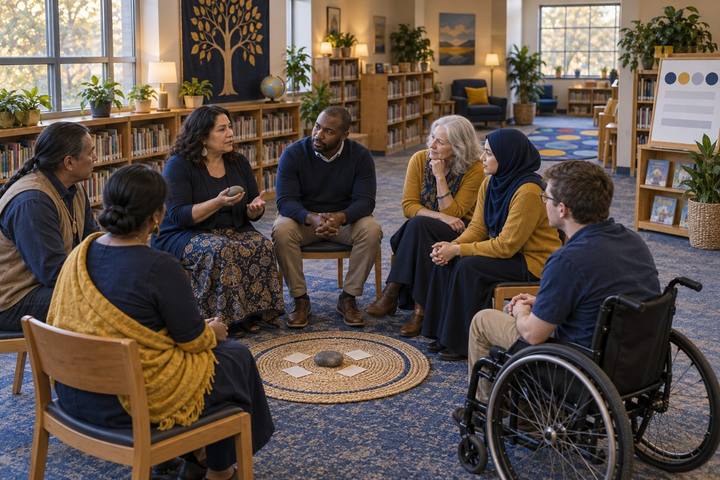
Circles, Not Screens: Relationships in a Digital Classroom
Teachers sit in a real community circle about group chats, AI companions, and sleep, then plan their own circle, co-create agreements, and rehearse what to say when a student tells them something online went wrong.
60 minutes · 3 handouts (cut-apart cards, reading, worksheet) · no devices needed
Gen AITeachers, Faculty, Coaches, Librarians
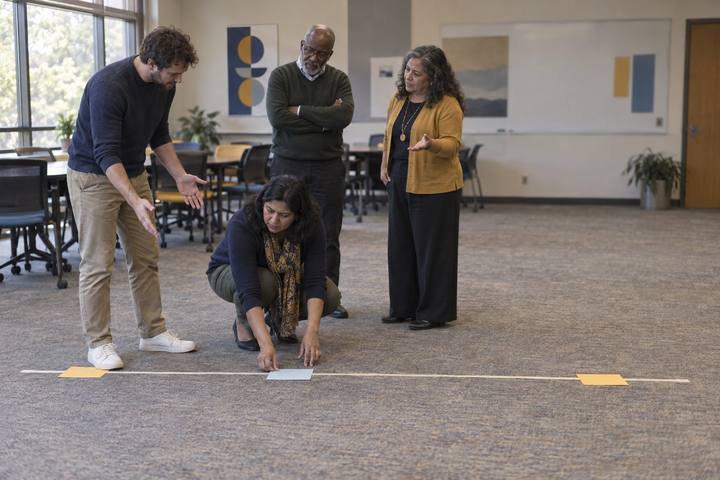
Co-Creation, Not Substitution
Educators sort real classroom and faculty tasks along a human-to-AI spectrum, co-create something with AI while keeping their own thinking visible, and write the disclosure and syllabus statements that make the line clear to students.
75 minutes · 3 handouts (card sort, worksheet, reading) · hybrid

Digital citizenshipTeachers, Librarians
Does This Need a Screen?
A fast, argument-starting card sort where teachers decide which classroom tasks are best unplugged, which earn their screen time, and where AI adds value, and have to say why.
20 minutes · 2 handouts (card sort, checklist) · no devices needed

Media literacyTeachers, Librarians
Evidence Before Tools
Teachers take apart a tech-heavy lesson, name the evidence of learning first, and rebuild it so every tool, or no tool, has to earn its place.
60 minutes · 3 handouts (reading, organizer, worksheet) · hybrid

Gen AITeachers, Librarians, Coaches, Leaders
Explain It to Grandma
Educators draft 90-second, jargon-free explanations of AI concepts and test them live on colleagues playing a skeptical grandparent, a second grader, or a school board trustee.
45 minutes · 3 handouts (cut-apart cards, worksheet, rubric) · no devices needed

Gen AITeachers, Coaches, Leaders
Feedback Partners: Peer Review in the Age of AI
Teachers run a glow-grow-question peer review on two AI-assisted drafts, questioning the AI's suggestions as hard as the writer's, then adapt the protocol for their own students.
60 minutes · 3 handouts (reading, organizer, worksheet) · hybrid

Digital citizenshipTeachers, Librarians
Kind by Design
Teachers rewrite prickly class messages, co-create norms for digital spaces the way students would, and work through what to do when a student's closest confidant is an AI companion chatbot.
50 minutes · 3 handouts (cut-apart cards, reading, organizer) · no devices needed

Media literacyTeachers, Librarians, Coaches
Lateral Reading Relay
Teams race to verify viral claims and an AI-written summary by leaving the page, not staring harder at it.
50 minutes · 3 handouts (cut-apart cards, organizer, worksheet) · hybrid

Digital citizenshipTeachers, Coaches, Librarians
LMS Tidy-Up: Courses Students Can Find Their Way Through
Educators run a student-eye findability test on a messy mock course, then tidy their own with consistent modules, one home for due dates, accessible files, and a check on any AI-generated materials.
60 minutes · 3 handouts (reading, organizer, checklist) · hybrid
Gen AITeachers, Coaches, Librarians
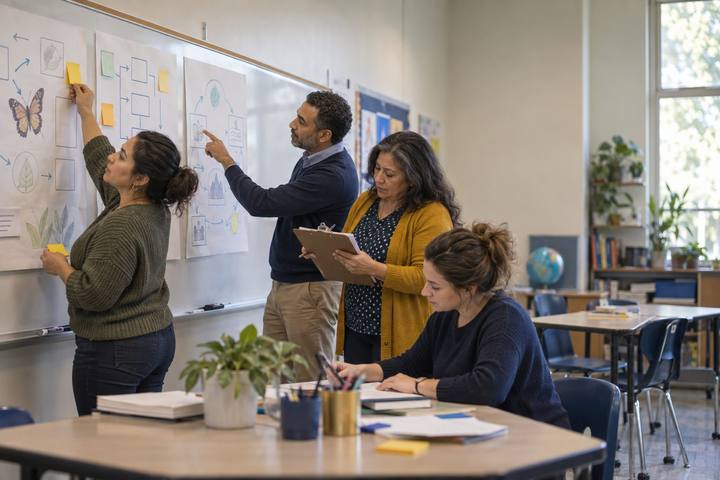
Personalization with Guardrails
Teachers design AI-supported versions of one reading task for different learners, then judge every version against the same learning target, a fact check, and a privacy line.
70 minutes · 3 handouts (reading, cut-apart cards, rubric) · hybrid

Media literacyTeachers, Librarians
Real, Remixed, or Made Up?
A gallery walk through ten mock viral posts (deepfakes, cheapfakes, out-of-context photos, and a few real ones) that teaches teachers to check where media came from instead of squinting for glitches.
50 minutes · 3 handouts (cut-apart cards, organizer, worksheet) · hybrid
Gen AITeachers, Librarians, Coaches
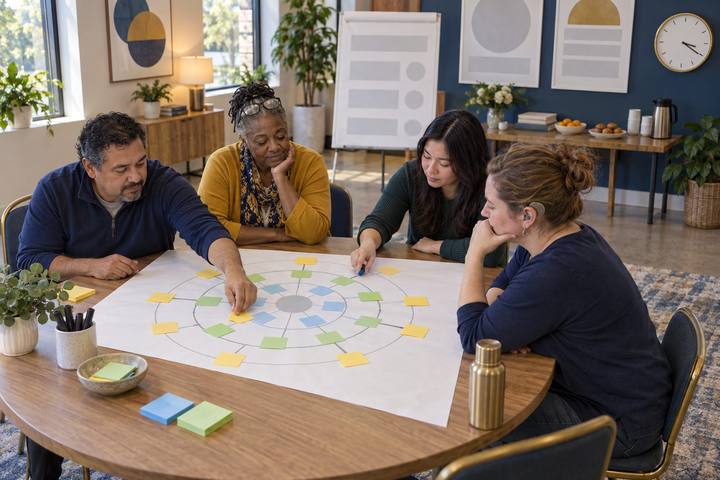
Ripple Out: A Futures Wheel for Learning
Tables take one plausible future headline about AI in school, map its ripples out three rings deep, and then work backward to what they should start doing this semester.
60 minutes · 3 handouts (cut-apart cards, worksheet) · no devices needed

Digital citizenshipTeachers, Librarians, Leaders, Staff
Screens at School, Screens at Home: A Family Conversation
Families sort everyday screen moments by purpose, learn in plain language what the Texas phone law does and doesn't cover, and start a family media agreement that fits their own home.
40 minutes · 3 handouts (cut-apart cards, reading, worksheet) · no devices needed

Gen AITeachers, Librarians
Seminar on a Machine's Answer
A fishbowl Socratic seminar where the "text" is a chatbot's confident, partly wrong answer, and the chatbot's second answer is worse, so teachers practice the questions that make students think instead of accept.
45 minutes · 3 handouts (reading, cut-apart cards, worksheet) · no devices needed
Gen AITeachers, Librarians
The AI Critic Tank
Teams design a solution to a local community problem by hand, invite an AI chatbot to tear it apart (as critic, never author), decide which critiques to accept, disclose the AI's role, and pitch to a panel.
90 minutes · 3 handouts (cut-apart cards, organizer, rubric) · digital

Gen AITeachers, Librarians, Coaches, Faculty
The Human Language Model
Educators become a tiny language model with paper slips and a cup, and discover firsthand why fluent AI text can be confidently wrong.
50 minutes · 3 handouts (reading, organizer, cut-apart cards) · no devices needed
Gen AITeachers, Librarians
The Prompt Ladder
Teachers climb eight rungs of prompts for the same classroom task, predict each mock AI output before reading it, and weigh what every added detail gains and what it costs.
45 minutes · 3 handouts (cut-apart cards, reading, organizer) · no devices needed

Gen AITeachers, Librarians, Coaches
Verify the Bot
Science teachers split confident AI explanations into checkable claims, verify each with two independent sources, and leave with a 15-minute workshop to teach the routine to colleagues.
60 minutes · 3 handouts (reading, organizer, worksheet) · digital

Digital citizenshipTeachers, Librarians
What Do My Apps Know?
Teachers read a mock app privacy policy the way a 12-year-old would, then audit the real tools in their own classroom and decide what to keep, change, or replace.
60 minutes · 3 handouts (reading, checklist, organizer) · digital
Gen AITeachers, Librarians
Whose Story Is Missing?
Teachers audit eight mock AI-generated images and texts for who shows up, who doesn't, and who gets flattened, then fix one with human judgment and Universal Design for Learning (UDL).
60 minutes · 3 handouts (cut-apart cards, organizer, checklist) · hybrid
Digital citizenshipCoaches, Teachers, Leaders, Staff
After the Rumor
A campus team digs past blame to the root causes of a fictional viral rumor and AI-edited image incident, then writes the trust and AI-use norms it will hold itself to next time.
60 minutes · 3 handouts (reading, organizer, worksheet) · no devices needed

Gen AICoaches, Teachers, Librarians
Co-Plan in 20
A timed, listening-first protocol a coach and teacher use to redesign one upcoming lesson so students verify an AI answer or evaluate a source, and turn in proof that they did.
50 minutes · 3 handouts (cut-apart cards, reading, worksheet) · no devices needed
Media literacyCoaches, Librarians
Coach-to-Coach Microteaching
Coaches plan and deliver 10-minute micro-PD sessions on one digital literacy move, get protocol-based peer feedback, and revise before a teacher ever sees it.
90 minutes · 3 handouts (cut-apart cards, worksheet, rubric) · hybrid

Gen AICoaches, Teachers, Faculty, Leaders
Did the AI Help?
Educators pick apart a fictional "it worked!" report, then design a small, honest classroom inquiry that could actually show whether an AI-supported task improved learning.
75 minutes · 3 handouts (card sort, reading, worksheet) · hybrid

Digital citizenshipCoaches, Librarians, Leaders
Four-Lens App Review
Teams vet three fictional classroom apps through four lenses (learning value, privacy, accessibility, AI transparency) and turn the verdict into a pilot a teacher can actually run.
60 minutes · 3 handouts (reading, rubric, worksheet) · hybrid

Media literacyCoaches, Teachers, Librarians
Hype Check Showcase
A tech showcase remix: teachers rotate through emerging-tech stations, including AI and synthetic media, and have to separate the vendor's claim from the learning evidence before they give a verdict.
75 minutes · 3 handouts (cut-apart cards, organizer, worksheet) · digital
Media literacyCoaches, Librarians, Leaders
Journal Club by Design
Coaches experience a research journal club as learners, reading a practice article with a skeptic's eye, then design their own PD series around real teacher needs and adult learning principles.
90 minutes · 3 handouts (reading, cut-apart cards, worksheet) · hybrid
Gen AICoaches, Teachers, Librarians
Looking for the Checking
A looking-at-student-work protocol that asks one question of a class set: did students actually verify what the AI told them, and how can we tell?
45 minutes · 3 handouts (reading, rubric, organizer) · no devices needed

Digital citizenshipCoaches, Teachers, Leaders, Staff
Never Paste This
A fast sort and a de-identification drill so data teams know exactly what student information must never go into an AI tool, and how to ask the question they need without it.
25 minutes · 3 handouts (card sort, reading, checklist) · no devices needed
Gen AICoaches, Teachers, Leaders
Norms for the AI Era
A PLC builds trust first, then sorts real shared-planning dilemmas and drafts its own norms for AI use: disclose it, check it, and never put student data in a prompt.
50 minutes · 3 handouts (cut-apart cards, card sort, worksheet) · no devices needed
Gen AICoaches, Leaders, Librarians
PD Menu Makeover
Coaches take apart a one-size-fits-all AI PD day and rebuild it as a choice menu, grounded in a real needs assessment, adult learning principles, and teaching strategies that already work.
75 minutes · 3 handouts (reading, card sort, organizer) · no devices needed

Digital citizenshipCoaches, Teachers, Leaders
Student Voice Data Dive
Coaches and teachers design a short, privacy-safe student survey on devices, AI, and wellbeing, then read returned results with Notice-Wonder-Next and act on what students said.
60 minutes · 3 handouts (checklist, reading, organizer) · hybrid

Digital citizenshipCoaches, Leaders
The Coaching Agreement
A coach and principal analyze a coaching-time audit together, including the drift that AI and tech rollouts cause, and write a one-page agreement before the coaching cycle begins.
55 minutes · 3 handouts (reading, organizer, worksheet) · no devices needed

Gen AICoaches, Teachers
The Shallow Answers Coaching Cycle
Coaches role-play a full listen, co-plan, model, measure, adjust cycle on one familiar problem: students finish the digital work but say very little.
60 minutes · 3 handouts (cut-apart cards, reading, organizer) · no devices needed

Gen AICoaches, Teachers, Librarians
Tool Tryout Lab
Instead of a demo and a vote, teacher teams test an emerging AI feature inside a GRITS lesson-study loop, watch students rather than the tool, and decide from student evidence.
90 minutes · 3 handouts (reading, rubric, organizer) · hybrid

Gen AICoaches, Leaders
Two Drafts of Feedback
Coaches score a human-written and an AI-drafted feedback note on the same lesson transcript, then set the ground rules for when AI belongs in observation, if it belongs at all.
50 minutes · 3 handouts (reading, checklist, card sort) · hybrid
Gen AICoaches, Leaders
Wait Time on the Record
Coaches code a consented, timestamped classroom clip for questioning and wait time, test an AI summary against the timestamps, and write feedback a teacher can act on tomorrow.
60 minutes · 3 handouts (reading, organizer, checklist) · hybrid

Gen AILeaders, Teachers, Faculty, Coaches
AI Ethics Case Court
Educators put fictional AI uses in grading, proctoring, detection, and monitoring on trial, then issue rulings with conditions that could become real policy.
70 minutes · 3 handouts (cut-apart cards, organizer, worksheet) · no devices needed
Digital citizenshipLeaders, Staff, Librarians
Designing a Family AI & Digital Citizenship Night
Campus teams design a family event where parents and kids try things together, check what AI tells them, and go home with conversations to have, not just rules to follow.
90 minutes · 3 handouts (cut-apart cards, worksheet, reading) · hybrid

Digital citizenshipLeaders, Staff
From Platform Pick to Community Story
A selection committee weighs three fictional math platforms on evidence, assessment data, accessibility, and privacy, then tells families the honest story of the choice in plain language, in more than one language, with a real way to talk back.
90 minutes · 3 handouts (reading, organizer, worksheet) · hybrid
Gen AILeaders, Faculty, Coaches
From Values to Guidance: Drafting a Campus AI Statement
Leadership teams start with what they value, sort draft clauses, and write a one-page generative AI guidance statement that people can actually follow.
75 minutes · 3 handouts (cut-apart cards, card sort, worksheet) · hybrid

Gen AILeaders, Coaches
Headlines From Year Three
Leaders write the success story and the failure story of their own AI or tech initiative three years out, then run a pre-mortem on the failure so they can build guardrails before launch.
70 minutes · 3 handouts (reading, organizer, worksheet) · hybrid

Digital citizenshipStaff, Teachers, Leaders
Inbox to Impact: Professional Digital Communication
Staff revise five realistic messages to families and colleagues for clarity, kindness, privacy, accessibility, and translation, and learn to review an AI-drafted message before it goes out.
60 minutes · 3 handouts (reading, checklist, organizer) · no devices needed

Gen AILeaders, Coaches, Teachers
Instructional Rounds for Digital Learning
Leadership teams run a full rounds protocol on five written classroom vignettes, noting only what students do with technology and AI, then find patterns and name the next level of work for teachers, coaches, and themselves.
75 minutes · 3 handouts (reading, card sort, organizer) · no devices needed
Media literacyLeaders, Staff
Is That Really Our Principal? A Synthetic Media Crisis Tabletop
A fake audio clip of the principal spreads through parent groups on a Friday night, and the leadership team has two hours of game time to verify, respond, and rebuild trust.
70 minutes · 3 handouts (cut-apart cards, organizer, checklist) · no devices needed
Media literacyLeaders, Coaches
Look-Fors That Look for Learning
Leaders sort walkthrough notes, practice on three classroom vignettes, and rebuild their technology observation tool so it captures evidence of learning instead of counting devices.
90 minutes · 3 handouts (card sort, reading, rubric) · hybrid

Digital citizenshipLeaders, Coaches, Teachers
Minutes With a Purpose: A Screen Time Audit
Teams audit a fictional district's school-device minutes by purpose, not just by total, and draft grade-band guidance that protects unplugged time and asks for evidence of learning.
70 minutes · 3 handouts (organizer, card sort, worksheet) · hybrid
Media literacyLeaders, Coaches, Faculty
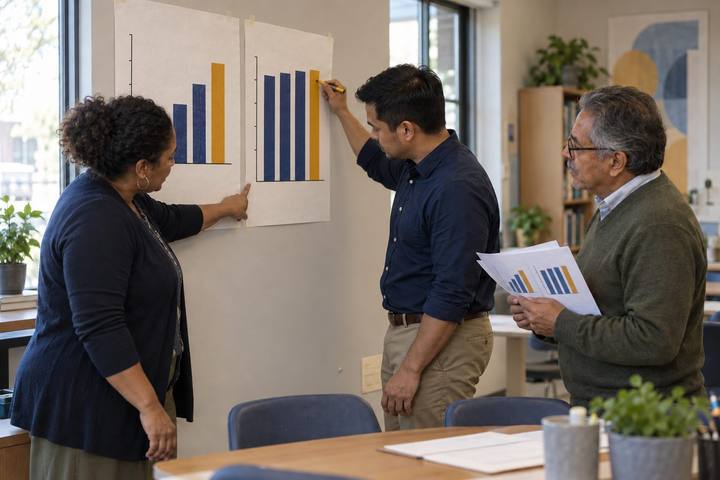
Read the Dashboard Before It Reads You
Leaders take apart eight mock dashboard panels, including an AI-generated "insight," to practice asking what the data shows, what it can't show, and who could be harmed by a hasty conclusion.
60 minutes · 3 handouts (cut-apart cards, organizer, checklist) · hybrid

Digital citizenshipLeaders, Coaches
The Five-Question Rollout Check
Leadership teams role-play the planning meeting for a campus-wide platform rollout and discover that the questions that matter most come after "should we buy it?"
60 minutes · 3 handouts (reading, cut-apart cards, organizer) · no devices needed
Gen AILeaders, Librarians, Coaches, Teachers
The Glass Box Checklist
Teams interrogate a fictional AI vendor's glossy fact sheet, sort the questions that actually matter, and build a transparency and accountability checklist they can use on real tools.
60 minutes · 3 handouts (reading, card sort, checklist) · hybrid

Media literacyLeaders, Faculty, Coaches
Two Grade Levels? Vendor Claims vs. Evidence
Leaders trace an AI product's headline result back to the study behind it, read the terms of service line by line, and design the local pilot that would actually answer "Does it work here?"
75 minutes · 3 handouts (reading, card sort, organizer) · digital
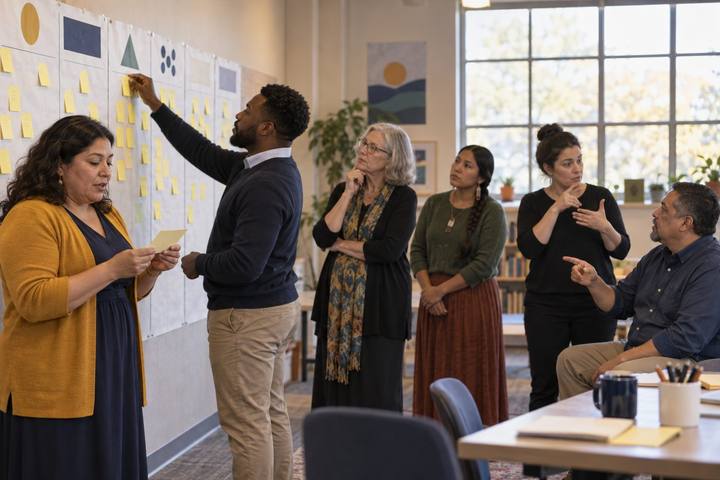
Digital citizenshipLeaders, Staff, Faculty
Who Gets Left Out? Mapping the Digital Divide
Leaders walk a proposed homework-and-AI-tutor initiative through the lives of ten fictional families, map every barrier they hit, and turn the map into policy.
75 minutes · 3 handouts (reading, cut-apart cards, organizer) · no devices needed