Student learningfor Grades 3–5
Photo Detective
Students investigate described photos that were cropped, edited, or made with AI, and learn two fact-checker moves that work better than staring: Stop, and Find better coverage.

All activities Student learning
Students trace every claim and citation in a polished AI research brief and discover which ones lead somewhere and which ones lead nowhere.
Generative AI tools can produce research summaries that look finished: confident prose, tidy numbers, a reference list in perfect format. Some of those references are real, some are real but misrepresented, and some do not exist at all, because the model predicts what a citation should look like rather than retrieving one. In this hunt, students audit a mock AI brief about a fictional town's heat problem against a "library shelf" of source cards, sort each claim by what the evidence shows, and then repair the brief. Every source in the packet is fictional, so the only way to win is to trace, not to recognize.
Hook
Hand out Handout A and give students 90 seconds to skim it. Ask: "If a classmate turned this in, what grade would it get just on looks?" Take a quick show of fingers (1–5). Then ask: "How many of these seven references did you check?" Say: "Today you're a research auditor. The brief was written by an AI chatbot. Your job is to find out which parts are true, which parts are twisted, and which parts were never true at all."
Facilitator noteExpect high scores. The format, the numbers, and the reference list all signal "done." That reaction is the thing you are teaching students to notice.
Model
Explain in plain terms: a chatbot builds text by predicting likely next words from patterns in its training data. It has seen thousands of reference lists, so it can produce one that looks correct: author, year, title, journal. Unless the tool is connected to a search or database and shows you the retrieved source, nothing guarantees the reference exists. Then model the trace on Claim 1: underline the claim, find its citation, walk to the reference desk, and ask for that source by author and year. Read the card aloud and think out loud: "Does the source exist? Does it say what the brief says it says? Is the number the same?"
Facilitator noteName the four verdicts now and write them on the board: Supported, Distorted (source exists but says something different), Unsupported (no citation, or source doesn't address it), Fabricated (the source cannot be found).
Explore
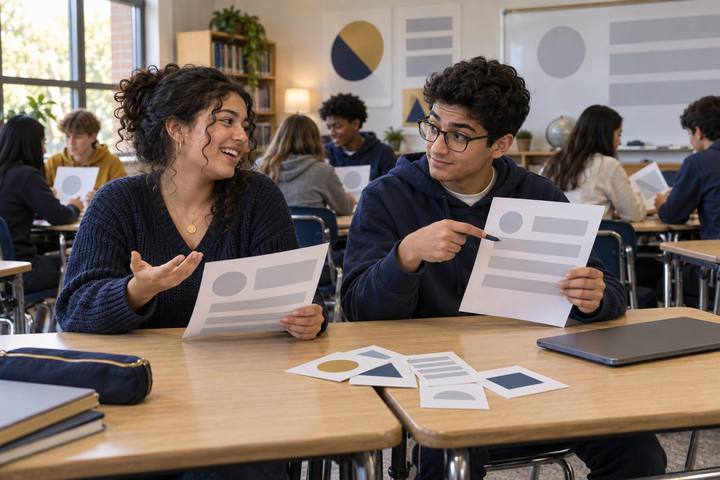
Teams trace Claims 2–7. Roles rotate each claim: the Tracer requests the source card at the desk, the Reader reads the card aloud, the Recorder logs the verdict and the evidence on Handout C. Teams may request only one card at a time and must name the citation exactly as the brief gives it. If they ask for a source that isn't on the shelf, hand them the "No record found" card and have them log what they searched for.
Facilitator noteListen for teams that mark a claim "supported" because the source exists. Push: "The source is real, but does it say that?" Claims 3 and 5 are built to catch that shortcut.
Debrief
Tally verdicts on the board. Ask: "How many claims survived? Which kind of error was hardest to catch, and why?" Most teams find fabricated citations easier to catch than distorted ones, because a missing source is obvious while a twisted one requires reading. Ask: "What single habit would have caught every problem?" Steer toward: open the source and compare the exact wording and numbers.
Apply
Project the AI summary you generated during prep, on a topic your class is studying. Teams choose three of its citations and search for them in your library databases and a search engine. For each, they log: Did it exist? Did it say what the AI claimed? What better source did we find? Teams under a device limit share one device and rotate the Tracer role. Unplugged option: skip the live output and have teams repair Handout A instead: rewrite the brief's summary paragraph using only supported claims, with the citations corrected.
Facilitator noteResults vary by tool and topic, and some tools now retrieve real sources. That is fine. The finding "this one checked out" is as valuable as "this one didn't," because the student verified it rather than assumed it.
Reflect
Each student writes a short auditor's note at the bottom of Handout C: "The claim I would have believed without checking was ___, and here's what the source actually showed: ___." Then: "When is it reasonable to use an AI tool for research, and what must you do before anything it says goes into your work?" Collect Handout C as the exit ticket.
Facilitator noteLook for students who separate using AI to find leads from trusting AI as a source. That distinction is the goal.
Run Round 1 exactly as written: the source cards at the reference desk are the unplugged version of opening a database. For Round 2, teams repair the brief on paper, keeping only supported claims, correcting distorted ones, and striking fabricated citations, then write one sentence per change explaining it. The trace-and-compare habit is fully preserved without a screen.
Post Handout A as a document students annotate with comments, one comment per claim with the verdict and the evidence. In Round 2, teams search library databases and the open web for the live AI output's citations and paste the direct link or database record into their log. For students 13+ at institutions that allow it, teams may ask an approved chatbot to "provide the source for claim X" and then check whether that answer holds up, which usually makes the lesson land harder. Students under 13 do not use this path; the teacher projects any AI tool.
Does it need a screen? The live round shows students what the paper round can only describe: a real tool, on their own topic, producing references they must actually find in a real database. The evidence of learning is the log of what they searched, what they found, and what they changed, which is something a finished essay never shows.
What you should be able to see or collect if it worked.
Students trace each claim in an AI research brief to its source, catch fabricated and distorted citations, and revise the brief, core ELAR inquiry and research.
For the next research assignment, students attach a short trace log to any work where they used an AI tool: each AI-suggested source, whether they found it, and what they used instead. At home, students can run the three-question check (Does it exist? Does it say that? Is the number the same?) on one claim they see in their feeds this week.