Student learningfor Grades 9–12, Higher Ed
Who Owns the Output?
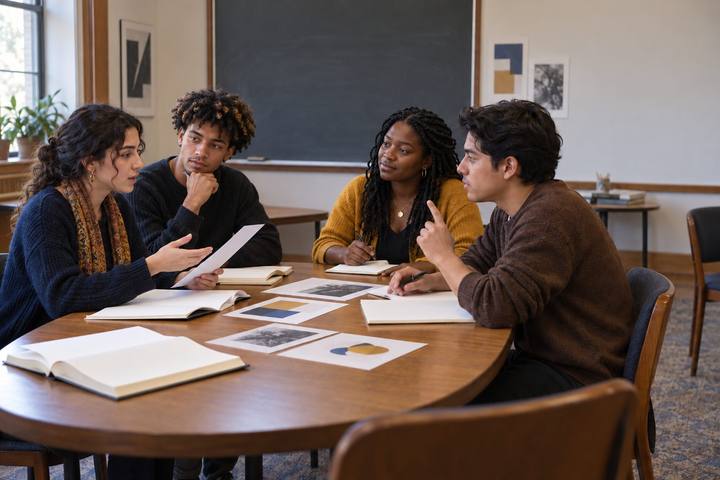
In a structured academic controversy, students argue both sides of an open question: is it fair for AI tools to learn from artists' work, and who gets credit for what they make?
All activities Student learning
Student teams research, draft, and pitch an AI and technology-use policy proposal to a mock board, and must pass the same five-question check real leaders use.
Rules about AI and technology use are often written for students without students in the room. In this three-session project, students become policy makers. They analyze an outdated fictional acceptable-use policy, gather perspectives from classmates and staff, and draft a focused proposal on one issue (AI in coursework, phones, data privacy, or accessibility). Every proposal must pass the five-question check that school leaders use: What is the vision? What evidence will guide us? What changes in instruction? Who might be left out? How will families understand the change? Teams then present to a mock board that asks hard questions. The strongest proposals can go to the real one.
Hook
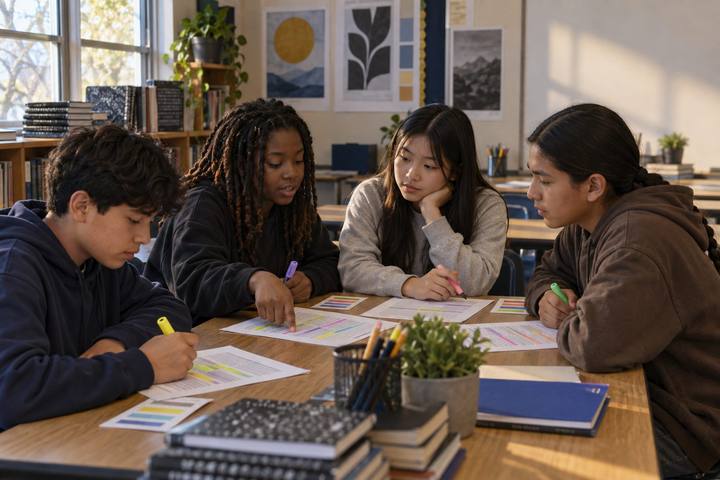
Students read the Harmon Creek policy on Handout A individually and mark each rule with a check (still works), a question mark (unclear today), or an X (outdated or unfair). Ask: "What does this policy assume about technology, about students, and about learning? What's missing entirely?" Collect answers on chart paper. Students almost always notice the policy never mentions AI and treats all devices as distractions.
Facilitator notePoint out the policy's one strength (it names privacy). Good policy work starts by keeping what works.
Explore
Teams choose one issue (AI in coursework, phones and personal devices, student data privacy, or accessibility of digital tools) and build an issue map on chart paper: the problem in one sentence, its parts, who is affected, and what they'd need to know. Then teams read the six stakeholder voices on Handout A and add each stakeholder's concern to their map. Finally, teams write three questions to ask real stakeholders before Session 2, such as a classmate survey, a quick interview with a teacher, or a family member's view.
Facilitator noteThis is systematic problem-solving (S5.1): break it down before solving it. Teams that jump to rules now will write weaker proposals.
Explore
Teams find what their own school's or college's current policy says about their issue and note gaps. If teams have devices, they look up the actual policy documents; otherwise, hand out the printed copies you gathered. Teams record: what the real policy says, what it doesn't say, and what their stakeholders are worried about that no policy addresses. Assign stakeholder interviews or surveys as homework, collecting no names or personal information.
Facilitator noteRemind teams to report perspectives accurately and anonymously: "a ninth grader said…" rather than names.
Create
Teams share what they learned from stakeholders, then draft their proposal on Handout B: a one-sentence vision, three to five specific policy statements written so a student could follow them, and the reason for each. Every statement must be something a person could actually do or check. Replace "Students should use AI responsibly" with "Students may use approved AI tools for brainstorming and feedback in any course unless the teacher's syllabus says otherwise, and must attach a disclosure when they do."
Facilitator noteTeams tend to write bans. Ask: "What problem does this ban solve? What learning does it block? Is there a narrower rule that solves the same problem?"
Apply
Teams answer the five-question check on Handout B for their draft. Then pairs of teams red team each other: each team reads the other's proposal and plays the toughest board member, raising the strongest objection they can think of, especially on "Who might be left out?" (students without home internet, students with disabilities, emergent bilinguals, families who don't use email). Teams revise. Optional: students 13+ may ask an approved AI chatbot, "What are the three strongest objections to this policy?", then decide which objections are valid and which aren't, logging their reasoning.
Facilitator noteIf a team uses AI for objections, ask them to name one objection the AI missed that a real stakeholder raised. Human voices remain the main evidence.
Practice
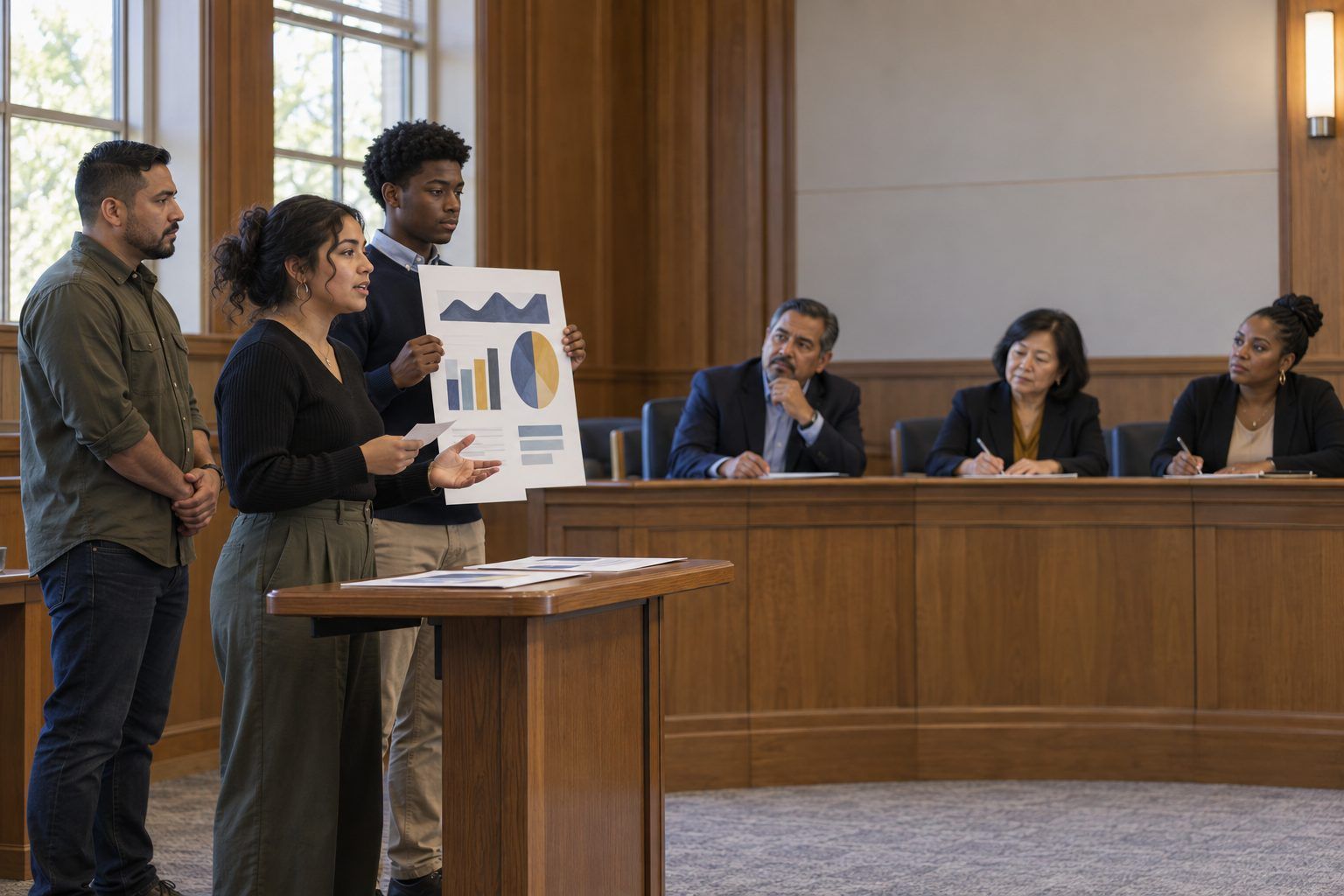
Teams prepare a 4-minute presentation (with or without slides) that states the problem, their evidence from stakeholders, the proposal, and how it passes the five-question check. Each member speaks. Teams rehearse once for another team, which gives one piece of feedback using Handout C's "Clear communication" row.
Facilitator noteA printed one-page proposal the board can hold is often more persuasive than slides.
Apply
Seat the board. Each team presents for 4 minutes and then takes 3 minutes of board questions. Board members score with Handout C. Suggested board questions: "How will you know if this policy works?" "What would a teacher who disagrees say?" "How will a family who doesn't speak English learn about this?" "What happens the first time someone breaks this rule?" Teams not presenting fill in a quick note: one idea from this team they'd borrow.
Facilitator noteAsk adult board members in advance to question respectfully and to praise specific evidence. Their questions model real leadership thinking.
Reflect
The board shares one strength from each proposal and names the two it would forward to real decision makers, with reasons. Each student writes a short reflection: "What did I learn about how rules get made, and whose voices are usually missing? What would I change in our proposal now?"
Facilitator noteIf you promised to forward proposals, tell students exactly where they're going and when they'll hear back.
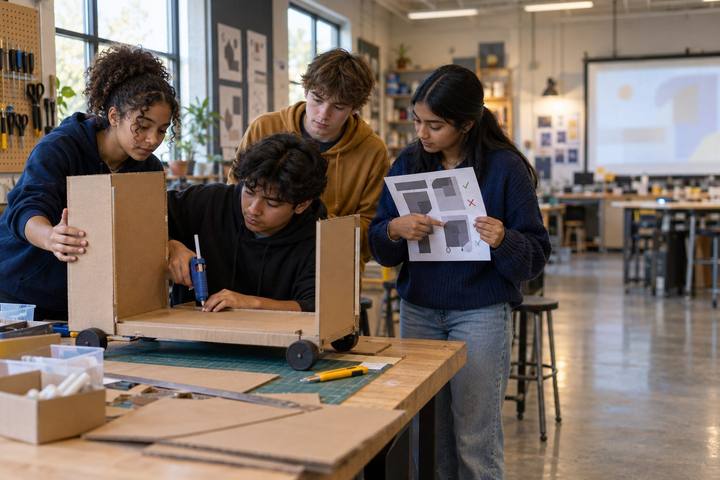
The whole project runs on paper: the fictional policy and stakeholder voices are printed, the issue map is on chart paper, stakeholder perspectives come from in-person interviews, and the board hearing is a live presentation with a printed one-page proposal. Provide printed copies of your real school or college policy for the comparison step.
Teams research their actual school's or college's policies online, collect anonymous classmate perspectives with a short survey form (no names or identifying data), draft in a shared document with comments from the red-team partner, and present with slides. The hearing can run as a video meeting with the board scoring on a shared form. An approved AI tool is optional and used only to generate objections that the team evaluates; it never writes the proposal.
Does it need a screen? A short anonymous survey reaches more student voices than a few interviews, and a shared draft keeps a visible record of how feedback changed the proposal. Both give the board better evidence. An AI objection generator adds value only if the team shows which objections they judged valid and why.
What you should be able to see or collect if it worked.
Students gather stakeholder evidence, draft a technology policy proposal that passes the five-question check, and defend it before a mock board.
Forward the board's top proposals to your campus or college leadership, student council, or site-based decision-making committee, and report back to students on what happened. Students take their one-page proposal home to discuss with family and bring back one family question for the team to answer.