Student learningfor Grades 3–5
Ad or Info?
Students sort mock posts, videos, and headlines into ads, information, and clickbait, hunt for persuasion tricks, and then create an honest, clearly labeled ad of their own.
All activities Student learning
Student newsroom teams race a deadline to decide which election-week tips are real, which are synthetic, and which they simply can't confirm yet.
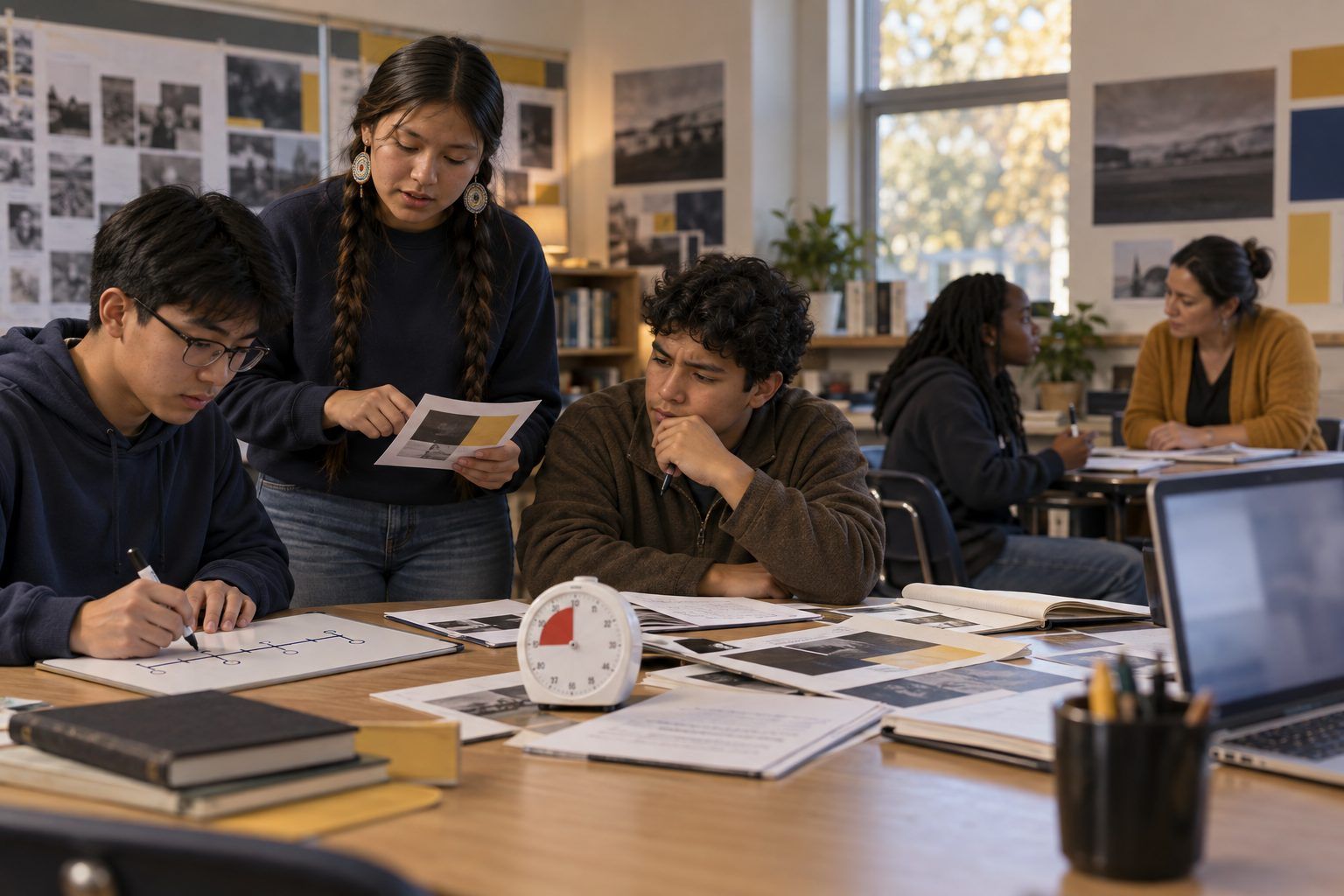
It is three days before the mayoral election in the fictional city of Port Alder, and tips are flooding the newsroom of the Port Alder Ledger: an audio clip, a rally photo, a video, a screenshot. Some are authentic, some are AI-generated or edited, and some cannot be confirmed before deadline. Student teams work as a verification desk, using provenance questions, lateral reading, and source contact rather than gut feel or a single detector, and they must write a publish, hold, or debunk decision they can defend. The big idea: with synthetic media, the most responsible answer is sometimes "we don't know yet," and saying so is part of the job.
Hook
If you prepared a synthetic image, project it next to an ordinary photo from your school's own event. Ask: "Which one was made by AI? How sure are you?" Take a vote. Reveal. Say: "Spotting fakes by looking is getting harder, and looking was never the best method anyway. Today you're journalists. Journalists don't decide by staring. They decide by checking where something came from."
Facilitator noteWithout a synthetic image, read Tip 1 aloud and ask whether the team would air it. The point is the same: appearance is weak evidence.
Model
Teach four questions and write them on the board: 1. Origin: Who first posted it, and when? 2. Corroboration: Does any other independent source confirm it (other recordings, witnesses, official records)? 3. Context: Is it real but from a different time, place, or event? 4. Contact: Can we reach the people shown or the original source? Explain that visual "tells" (strange hands, warped text) can help but are unreliable, and AI detection tools can be wrong in both directions, so a detector result is one clue, never a verdict. Assign roles and review them: the Editor runs the clock and makes the final call; the Verification Lead works origin and context; the Source Reporter makes calls at the sources desk; the Standards Editor asks "What harm happens if we're wrong?"
Practice
Start a 25-minute countdown. Teams flip tips one at a time. For each, they decide which question to pursue first and request Reporting Results by asking a specific question at the sources desk ("Who first posted the audio?" "Can we reach the candidate's campaign?"). Vague requests ("Is it fake?") get "Our newsroom doesn't know that yet. What would you check?" Teams log every step on Handout B and assign each tip a status: Publish as authentic, Publish a debunk, Hold (unconfirmed), or Don't amplify.
Facilitator noteGive Reporting Results only for the question asked. A team that never asks about context will not learn that the flood photo is old. That is realistic, and it makes a great debrief.
Debrief
Each Editor reports one decision and the evidence that decided it. Compare decisions across teams on Tips 2 and 6, the two most contested. Ask: "Who held a tip that another team published? Who was right, and how would you know?" Then ask the Standards Editors: "What's the harm if we publish a fake? What's the harm if we ignore a real one?" Discuss how a debunk can accidentally spread a fake (repeating the claim in the headline) and how newsrooms reduce that risk.
Facilitator noteTip 5 (the authentic but embarrassing clip) is the lesson students often miss: the "liar's dividend," where real evidence gets dismissed as fake. Verification protects true stories, too.
Create
Each team writes a short Editor's Decision Memo for one tip they held or debunked: what they checked, what they found, what they still don't know, what they will publish (or why they won't), and what they'll tell readers about how they verified it. Teams self-score with Handout C and trade with another team for one piece of feedback.
Facilitator notePush teams to include a sentence for readers, such as "Here's how we checked," which models transparency.
Run the whole simulation on paper. The tip cards describe each piece of media in detail, and the Reporting Results slips stand in for reverse image searches, lateral reading, and phone calls. Students still practice choosing which question to ask first, which is the real skill.
Give each team one device and add a practice tip using an image you know the origin of (for example, a photo from your school's public website) so they practice a real reverse image search and lateral read before the deadline round. Teams can keep Handout B as a shared document and publish their memo to a class "newsroom" page in your LMS. Any AI image generation stays on the teacher's projector, and no one creates synthetic media of real people.
Does it need a screen? A live reverse image search shows students how quickly an old photo's original context can surface, which makes the Context question feel worth asking. The paper round teaches the same judgment; the digital warm-up proves the checks are fast enough to actually do.
What you should be able to see or collect if it worked.
Student newsroom teams verify election media through origin, corroboration, and context, then write an editor's memo separating what was checked from what remains unknown.
For the next week, students bring in one image, clip, or screenshot they saw online about any current topic, and the class runs the four desk questions on it in five minutes as a warm-up. At home, students can share the four questions with family before the next local election.