Student learningfor Grades 3–5
Digital Footprint Trail
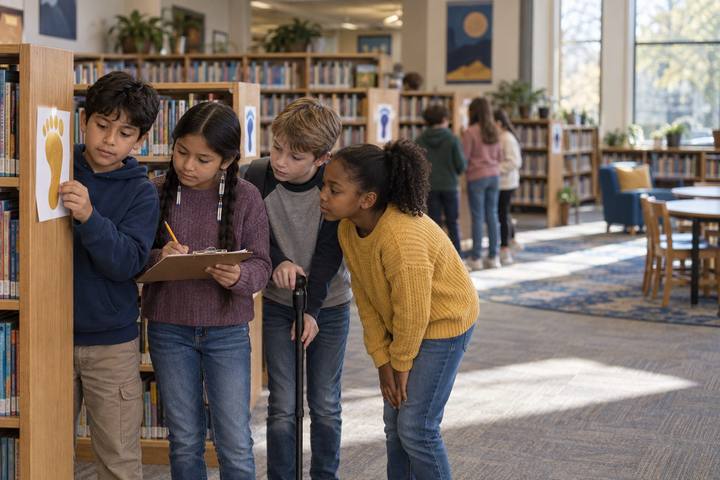
Teams follow a trail of paper footprints left online by a fictional fourth grader, piece together what a stranger could learn about him, and plan the footprints they want to leave.

All activities Student learning
Middle schoolers learn that your face and body are yours, that using AI to make a fake, hurtful image of a real person is never a joke and can be against the law, and exactly what to do if they see one, tell a trusted adult and don't pass it on.
Middle schoolers are meeting apps that can paste anyone's face into fake images or change a real photo into something embarrassing or cruel. This lesson gives them a clear, age-appropriate foundation before they face it: your likeness, your face and body, belongs to you, and no one has the right to make or share a fake, hurtful image of you or anyone else. Without any explicit content, students learn that using AI to make a non-consensual, fake sexualized or humiliating image of a real person (a non-consensual image made without their permission) is not a prank, hurts a real person, and can be against the law, even for kids. The heart of the lesson is what to do: if you're targeted, it's not your fault and you tell a trusted adult; if you see one of someone else, you don't laugh, don't share it, tell an adult, and check on the person. Students practice being the upstander who refuses to pass it on. The tone is calm, respectful, and empowering, not scary, centered on consent, dignity, and looking out for each other.
Hook
Ask: "If someone took a photo of you and changed it to make you look bad, then sent it around, how would that feel? Did they have the right to do that?" Draw out the core idea: your face and body are yours, your likeness, and people need your okay to use your image, especially to change it. Say today is about that right, and about looking out for each other when someone breaks it.
Facilitator noteAnchor on consent and dignity in words students own. Keep it about respect and fairness; the legal and safety points land better on that foundation.
Explore
Groups sort Handout A cards into Okay and Not okay based on consent and respect, for example: "Drawing a funny cartoon of yourself" (okay), "Using an app to put a classmate's face on a fake, embarrassing body and sending it" (not okay), "Posting a group photo after everyone said yes" (okay). Debrief the line: it's about consent and whether it hurts a real person. Name clearly that making a fake sexual or humiliating image of a real person crosses from unkind into abuse, and can be illegal.
Facilitator noteKeep examples non-graphic. The sort builds the consent concept; you provide the one clear, serious sentence that fake sexualized images are abuse and illegal.
Model
Explain calmly: if a fake, hurtful image of you ever shows up, it is not your fault, the person who made it did something wrong. The move is simple and strong: tell a trusted adult right away, don't try to handle it alone or fight back online, and let the adult help stop it and get it taken down. Reassure them adults and even the law can help, and that telling is brave, not babyish or snitching.
Facilitator noteTwo reassurances matter most at this age: it's not your fault, and telling an adult is strength. Many middle schoolers fear they'll be blamed or punished.
Practice
Groups work Handout B scenario cards where they're the bystander: a fake image of a classmate shows up in a chat; a friend laughs and forwards it; someone dares you to share. For each, groups choose upstander moves, don't share, don't laugh, tell a trusted adult, check on the person, and reject the spread-it moves. They practice one real thing to say or do, like leaving the chat, saying "that's not okay," or privately messaging the target, "I saw it, I didn't share it, you okay?"
Facilitator noteGive concrete, doable moves. "Be an upstander" is abstract; "don't forward it and tell Ms. Lee" is something a 12-year-old can actually do.
Reflect
On Handout C, each student writes their plan: a trusted adult they'd tell, one upstander move they'll always make, and one thing they learned about respecting people's images. A few share. Close together on the message: "Your face is yours. Everyone's is. If someone breaks that, we don't laugh and we don't share, we tell an adult and we help."
Facilitator noteEnd empowered and kind. The takeaway is agency and mutual care, not fear. Make sure every student leaves knowing at least one trusted adult's name.
Fully unplugged and non-graphic: a consent sort, scenario cards, and a written plan. No real or fake images are shown, searched, or made, students learn the ideas and the actions entirely through discussion and role-play.
Optionally show the names of trusted adults and how to reach a counselor on screen so students copy real contacts onto their plan. No image is ever displayed or created.
Does it need a screen? Intentionally unplugged; the learning is about consent, dignity, and what to do, which is taught through discussion and role-play. A device would add nothing and could risk exposure to harmful content.
What you should be able to see or collect if it worked.
Middle schoolers learn that their likeness is theirs and consent matters, that fake hurtful images of real people are wrong and can be illegal, and how to be an upstander who tells a trusted adult.
Students keep their upstander plan and know the trusted adult they'd go to. The class connects to the broader school effort (staff and family companion activities) so the whole community shares the same expectations, and older students build on this in the 9–12 lesson.