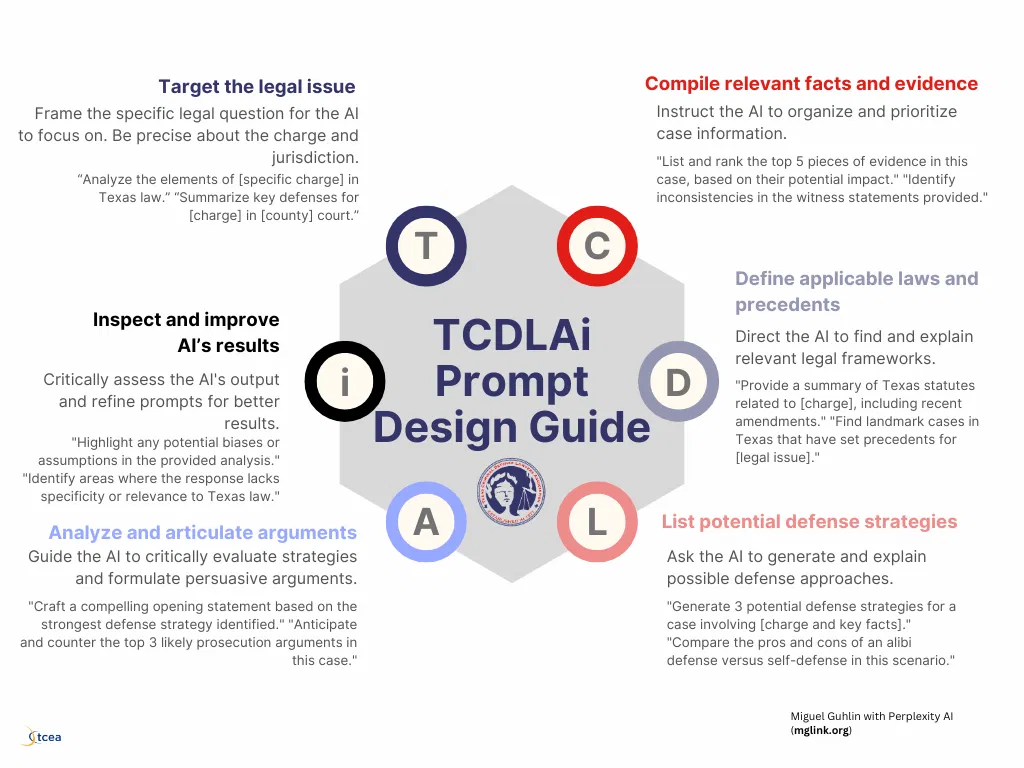
The idea
The five uppercase letters build the draft. The lowercase i is where you stay a lawyer. Run the letters in order when a task matters, and the model stays focused while you stay in control.
Target the legal issue
Frame the precise legal question. Be exact about the charge and the jurisdiction.
Compile relevant facts and evidence
Give the model the facts to organize and prioritize. Never let it add facts you did not provide.
Define applicable laws and precedents
Point the model to the statutes and precedents it must work from. This is where grounding happens.
List potential defense strategies
Ask for approaches, each tied to a fact and a legal basis.
Analyze and articulate arguments
Guide the model to evaluate strategies and shape persuasive arguments.
Inspect and improve the results
Critically assess the output and refine. This step is yours, and it is the one that protects you.
The verification rule. If you cannot pull the opinion or statute yourself from a real database, you do not have a citation. You have a hypothesis that still needs proof.