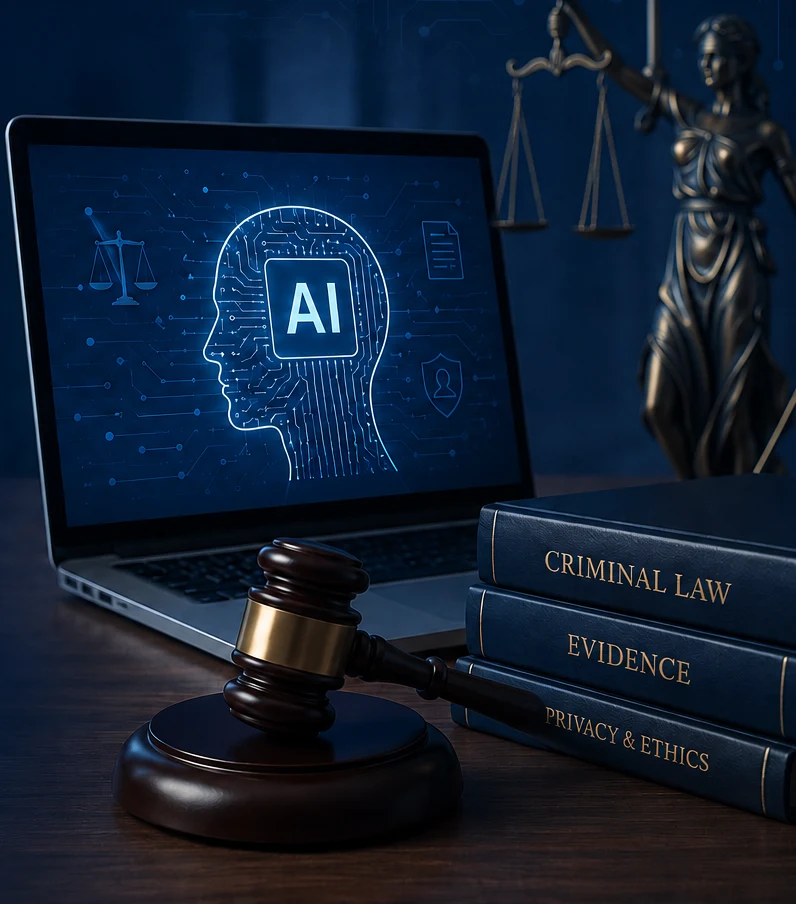
Welcome. My name is Miguel Guhlin, and over the next hour we are going to look closely at how generative AI fits into criminal defense work, where it helps, and where it puts your license at risk.
I want to set the tone right away. This is not a sales pitch for any tool, and it is not a warning to stay away. It is a working session. You will read short fact patterns, run real prompts in a free chatbot, and see for yourself where the output is useful and where it quietly goes wrong.
You do not need a paid account to take part. Everything is at the short address on the screen. Take a moment to open it now, and we will get started.
Meet Miguel Guhlin
A seasoned educator and recognized writer focused on transforming work through technology integration, with experience spanning the classroom to the district level. Today he is Director of Professional Development for TCEA.
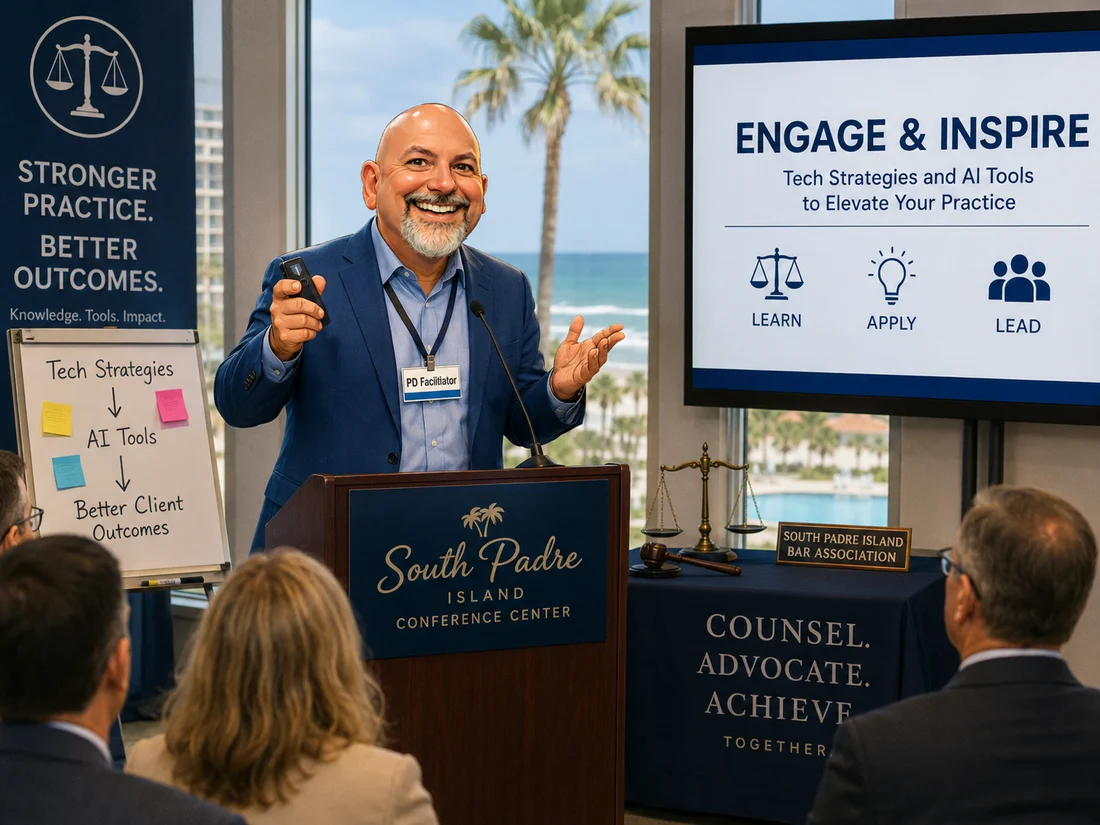
What he does now: creates extensive content, from blog posts to online courses, with a recent focus on AI in education. Read more at mguhlin.org and blog.tcea.org.
A quick word about who is guiding you today. My name is Miguel Guhlin, and I have spent my career helping people put technology to real, responsible use, from the classroom all the way up to the district level.
I have served as a district technology director, an instructional technology director, an on-site coordinator and professor of record for an online master's program, and a K-12 classroom teacher. Today I direct professional development for TCEA, where I write and build online courses, lately with a heavy focus on how AI actually lands in real practice.
I tell you that not for the resume, but so you know where I am coming from. I am here as a practitioner and a teacher, not a vendor. Now let us look at what this hour is really about.
The Cite That Wasn't41 Seconds
Perfect motion. Fake citation. The judge found it first. Today, we learn to check everything.
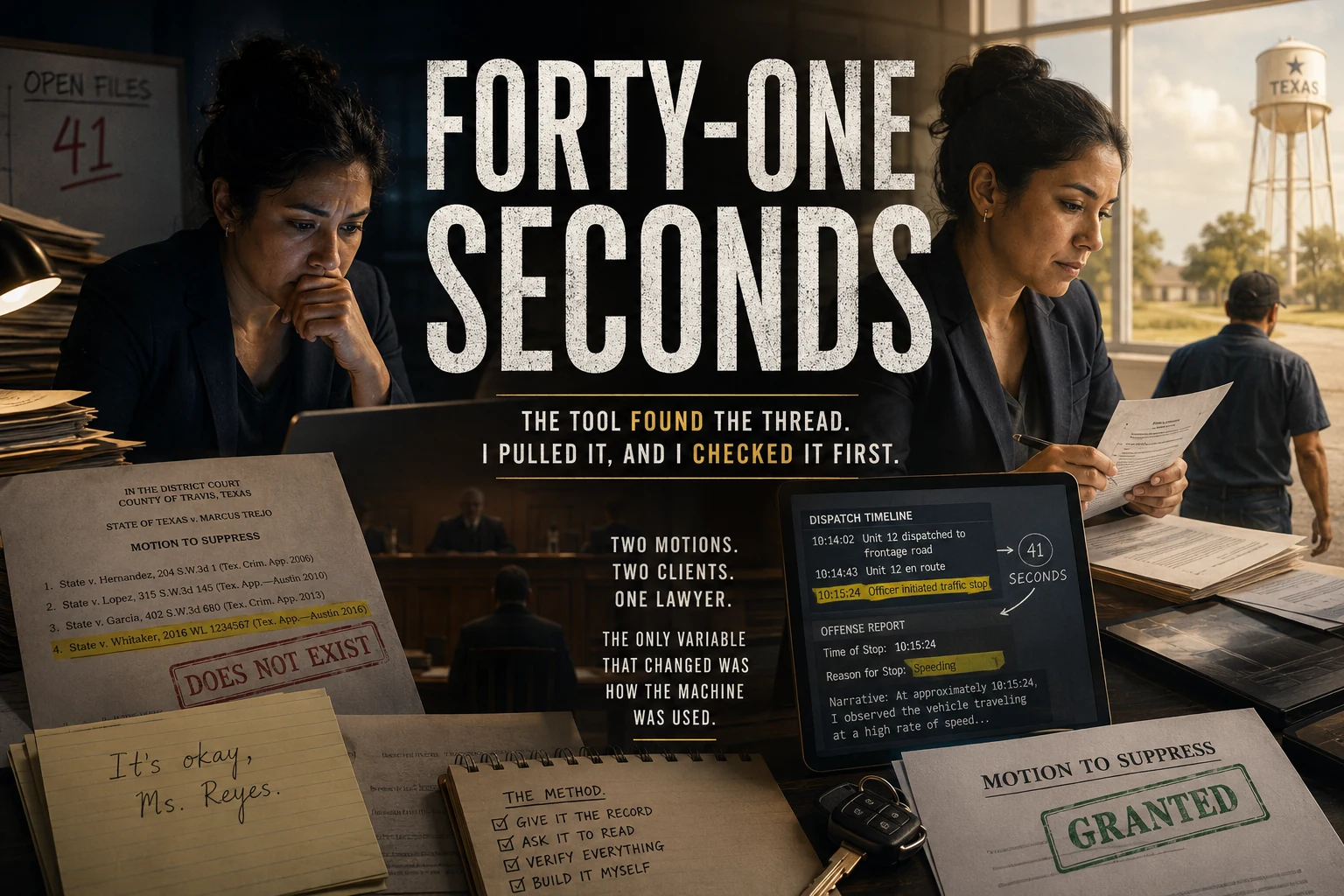
Read it slowly. Let the last line sit for a beat before you move.
That is the whole hour in fifteen words. A motion that looked right. A case that was never real. A judge who checked when the lawyer did not. Every one of you could file that motion next week, and none of you would mean to.
So we are not here to decide whether AI belongs in your practice. We are here so that the judge is never the first person to check your work.
Where AI helps, where it hurts, and who answers for it
- Common AI failures, including hallucinated case law and fabricated citations
- Confidentiality and client data risk in consumer chatbots
- Structured prompting and few-shot examples as safeguards
- Retrieval-augmented generation to hold AI to trusted sources
- Human oversight, verification, and ethical decision-making throughout
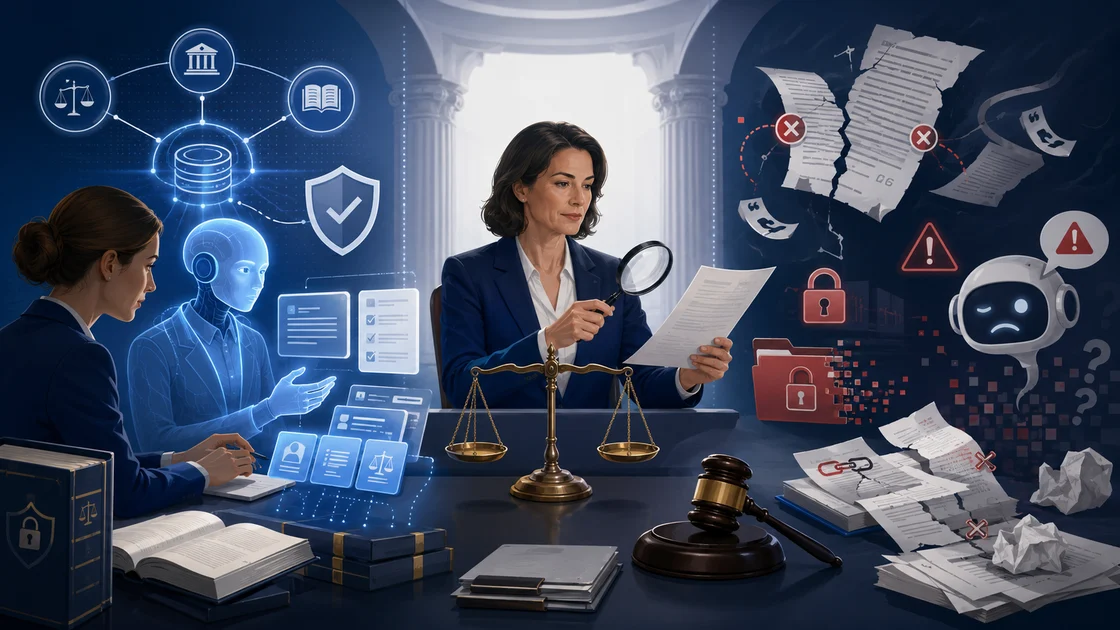
These are the threads we will pull on. You have all seen the headlines about lawyers sanctioned for citing cases that never existed, so we look hard at hallucinated case law and how it happens.
We look at confidentiality, because pasting a client fact into the wrong tool can be its own problem before a single word is filed.
Then we turn to the fixes. Structured prompting gives the model guardrails. Retrieval-augmented generation, which I will just call grounding, keeps the model tied to sources you trust instead of its own memory.
And underneath all of it sits your judgment. Keep that in mind as we go, and we will move to what you will actually be able to do by the end.

By the end you will be able to
- Identify ethical risks tied to AI use in legal practice
- Explain why you remain responsible for AI-assisted work product
- Recognize when AI use implicates confidentiality or competence
- Apply guardrails and verification to reduce AI-related errors
- Use structured prompting and source-grounded workflows for accuracy
These are our objectives, and they are ethics-focused on purpose. Notice that not one of them is about becoming a faster typist.
You will be able to spot where AI creates risk, explain to a colleague or a bar committee why the responsibility stays with you, and recognize the moments where confidentiality and competence are in play.
Then the practical half. You will apply concrete guardrails, and you will use structured, source-grounded prompting to raise the accuracy of what you get back.
If you can do these five things on Monday, this hour was worth your time. Let me show you how we are going to spend it.
Take the AI fluency self-check
Open the resources page, answer five honest questions, and note your level. Nothing is stored or sent anywhere.
👋Meet your table
Name, the county you practice in, and one word for how AI feels in your work right now.
📊Compare
Share your level. What surprised you about your own answers, and did your score match your gut?
🎯Reflect
Name one AI habit you want to build this year, and say it out loud to your table.
Let us start by taking our own measure. Open the resources page and find the AI Fluency Self-Assessment. It is five quick questions, nothing is stored, and it lands you on one of four levels, from Disconnected to Strategic. Take two minutes and answer honestly. There are no wrong answers in this room.
Once you have your level, turn to your table. First, introduce yourselves. Name, the county you practice in, and one word for how AI feels in your work right now. Then compare your levels, and talk about what surprised you. Did the score match your gut.
Before we move on, each of you name one AI habit you want to build this year and say it out loud. Saying it to the table makes it real. Give them about five minutes, and listen for the themes, because they will come back all session. When you are ready, we begin with ethics.